Why Loneliness Makes It Harder to Connect (And How to Break the Cycle)
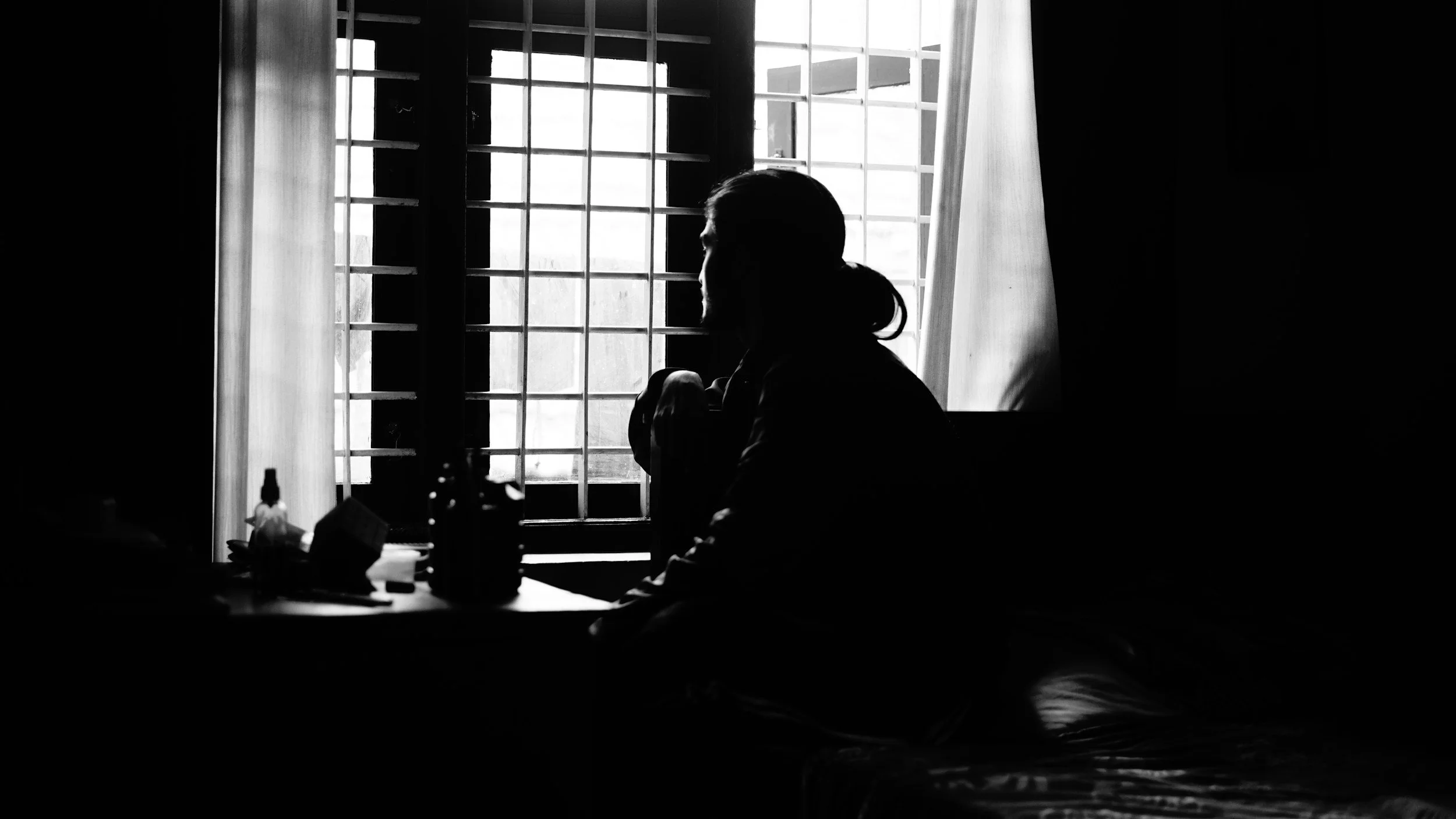
I sat in a bustling city centre café on a Monday morning, surrounded by the comfortable hum of conversation and clinking cups. My phone buzzed with notifications, messages, likes, comments, little digital confirmations that I existed in other people's worlds. People everywhere, and yet I felt profoundly alone.
This wasn’t to be confused with the peaceful solitude of an early morning walk. Nor the restorative quiet of taking some time for myself. This was something different. It wasn’t my desire in that moment to be silent and solo, and I felt the peculiar ache of being surrounded by connection, yet feeling entirely invisible.
I had caught the train, entered a cafe, ordered a drink, all without any real human interaction or something telling me I existed, mattered or was connected to what was going on in the world around me. I hadn’t said a word all day. I sat there quietly, invisible, working away without so much as catching anyone’s eye or attention long enough to remind me I was there, real, seen. I didn’t speak up or reach out either. It felt too vulnerable to strike up a conversation, and with whom anyway? What would I say? I simply left just as quietly as I’d come, slipping out silently, returning home on the train without a word, greeted by my empty apartment, to work solo for the rest of the day.
When Your Brain Becomes Your Own Worst Enemy
Here's the counterintuitive truth researchers have discovered: loneliness isn't actually about being alone. It's about feeling alone, even in a crowded room. And when we feel lonely, our brains shift into a self-protective mode that neuroscientist Dr. John Cacioppo calls "the loneliness loop."
UCLA researcher Dr. Naomi Eisenberger found something remarkable when she scanned the brains of lonely people: social rejection lights up the exact same neural pathways as physical pain. That means your brain processes loneliness as a genuine threat to your survival, triggering the same alarm systems that would fire if you were facing actual danger. This makes evolutionary sense because for our ancestors, social isolation meant death. Being cast out from the tribe meant no protection from predators, no shared food, no chance of survival. So our brains developed a hypervigilant threat detection system that kicks in when we feel disconnected.
But here's where it gets tricky. That same protective mechanism that once kept us alive now keeps us isolated :(
The Trap We Can't See
When you're feeling lonely, your brain doesn't just register the discomfort. It fundamentally changes how you perceive and respond to social situations. Cacioppo's research at the University of Chicago revealed that lonely people become:
More vigilant to negative social cues. The neutral expression across the table = your brain reads it as rejection. The delayed text response becomes Proof that no one cares.
Less likely to take social risks. Reaching out feels too vulnerable when you're already hurting, so you wait for others to initiate. But they're waiting too, and interpreting your silence as disinterest.
More critical of yourself and others. You notice every awkward thing you said, every moment you felt you didn't belong. And you're quicker to judge others as uncaring or superficial.
Put all this together and it's a vicious cycle. The lonelier you feel, the more your brain interprets the world as socially threatening. The more threatened you feel, the more you withdraw. The more you withdraw, the lonelier you become. This is the loneliness loop in action.
And here's what makes this truly insidious: you don't realise it's happening. In the moment, it just feels like the truth about who you are and how the world works.
Who's Really Struggling (It's Not Who You Think)
We imagine loneliness afflicting elderly people in nursing homes, and yes, isolation is a real concern for older adults. But the research reveals something surprising: the loneliest demographic isn't our grandparents.
It's young adults aged 18 to 25.
The Cigna loneliness study found that Gen Z scores highest on loneliness scales: 48.3 compared to 38.6 for Baby Boomers. In the UK, 40% of people aged 16-24 report feeling lonely often, compared to 27% of those over 75. Australian research shows young adults are three times more likely to report loneliness than seniors.
This is the generation that grew up with smartphones and social media, with the ability to connect instantly with anyone, anywhere. And yet, they're the loneliest of all.
We're hyperconnected yet profoundly disconnected. We have 900 Facebook friends but struggle to name three people we could or would call in a crisis. We're performing connection on social media while starving for someone who actually sees and hears us.
The Workplace Epidemic We're Not Talking About
Perhaps nowhere is the loneliness paradox more evident than at work. We spend a third of our lives with colleagues, yet 60% of UK employees and 61% of American workers report feeling lonely at work.
Think about that. You're in meetings all day, your Slack is constantly pinging, you're surrounded by people. And you feel alone.
The shift to remote and hybrid work has intensified this. While 72% of gig economy workers report regular loneliness, even traditional employees aren't faring much better. Australian research shows 40% of remote workers have felt increased loneliness since the pandemic, and those awkward hybrid arrangements where some people are in the office while others dial in are creating a "proximity bias" where remote workers feel like outsiders looking in.
The cost isn't just emotional. Workplace loneliness costs Australian businesses $2.5 billion annually in lost productivity. In the US, that figure is a huge $406 billion. Lonely workers take more sick days, are 50% less productive, and are twice as likely to quit.
We've created workplaces that maximise efficiency while minimising the very thing that makes us human: genuine person to person connection.
Breaking Free From the Loop
So how do we escape this loneliness paradox? How do we reach out for connection when our brains are screaming a warning that it's unsafe?
First, we need to understand what we're up against. That defensive voice telling you people don't really want to hear from you? That's not truth. That's your brain's threat detection system doing its job too well.
Notice when you're interpreting neutral interactions as rejection. Your colleague who walked past without saying hello might have been preoccupied with a deadline, not ignoring you. The friend who hasn't texted back might be overwhelmed with their own life, not ghosting you.
Second, we need to act despite the discomfort. Waiting until you feel less lonely to reach out is like waiting until you feel fit to start exercising. The action creates the feeling, not the other way around.
So my recommendation is to send the text. Suggest the coffee date. Show up to the thing even though your brain is listing every reason not to. Connection is a skill we practice, not a feeling we wait for.
And here's what research shows actually works: small, consistent actions over grand gestures. A five-minute conversation with your barista matters more than you think. Those "weak ties" - that is, acquaintances, colleagues, the people you see regularly but don't know deeply - contribute significantly to wellbeing in ways that even close friends can't replicate. Try it out and see for yourself.
The Permission You're Waiting For
The hardest part of loneliness is the shame. We think we should be better at this, that everyone else has figured out connection while we're struggling. We scroll through social media seeing evidence of other people's belonging and feel even more defective.
But research indicates that most people are feeling this way. Loneliness isn't a personal failing. It's a public health epidemic affecting 61% of Americans, with similar rates across Australia, the UK, and Europe. Your brain is trying to protect you from social pain the only way it knows how. It's just using outdated survival mechanisms that no longer serve you in the modern world.
You're not broken. You're human. And the very fact that loneliness hurts so much is proof of how deeply we're wired for and crave connection.
The path out requires doing the uncomfortable thing - reaching out - when every instinct screams to withdraw and retreat. It requires extending generosity to yourself when you stumble, and extending generosity to others when their responses don't match your hopes.
But every meaningful connection in your life started with someone taking a risk. Someone said hello first. Someone suggested getting together. Someone made themselves a little bit vulnerable.
That someone can be you.
Not because you're perfectly confident or entirely healed from past hurts. But because you understand the loneliness paradox and how it plays out now. Your brain's protection has become your prison, and the key to unlocking it is the very thing that feels most dangerous: reaching out anyway.
Solo moments are to be savoured - when you actually want them. But if you’re feeling lonely, isolated, disconnected, consider what small step you could take today toward connection. Perhaps it's time to send that text, accept that invitation, or simply make eye contact with someone and really see them. Your brain might protest. Take the risk anyway and you’ll break the loneliness loop.